What detection asks of a dog
What Makes a Detection Dog
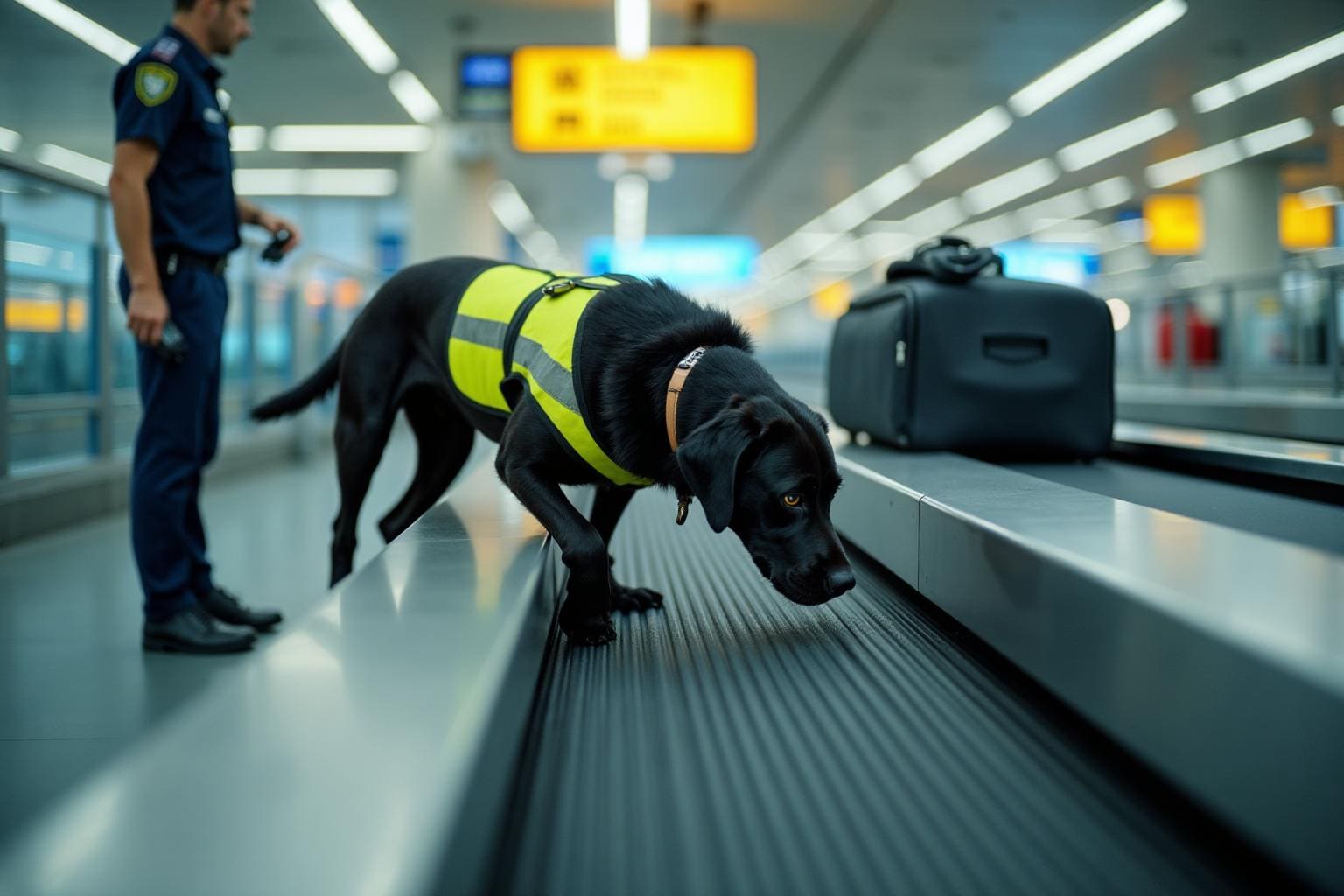
Detection isn't really about nose — almost every dog has a phenomenal nose. It's about the drive to keep searching when the scent is faint, the environment is hostile and the handler isn't reinforcing constantly.
- Off-the-charts retrieve / play drive (the engine of every reward-based detection system).
- Independent search behaviour — willingness to leave the handler.
- Stable nerve in chaotic environments (airports, ports, public events).
- Physical stamina to work for hours.
- Non-threatening appearance for crowd-facing work.
The dominant breeds
The Three Detection Workhorses
- Working Line Labrador — the world's #1 detection breed. Used by Australian Border Force, AFP and most state police agencies. Non-threatening, biddable, off-the-charts retrieve drive. Read profile.
- Belgian Malinois — increasingly used for high-pressure detection (explosives, military, single-purpose work). More demanding to handle than a Labrador. Read profile.
- Working Line German Shepherd — the traditional dual-purpose detection / patrol dog. Less specialised than Labradors but capable when bred and trained right. Read profile.
Specialists
Other Capable Detection Breeds
- Springer Spaniel — extensive use in conservation and explosive detection in the UK and increasingly Australia. Light, athletic, fast.
- Cocker Spaniel — rising in conservation detection (koala scat, cane toad eggs, weed seed). Compact, biddable, intense.
- German Shorthaired Pointer — very capable but high-energy and requires experienced handling.
- Beagle — used by Australia's Department of Agriculture for biosecurity at airports and ports. Slower but extremely thorough.
Why our Labrador programme
Why We Breed Labradors for Detection
We breed working line Labradors specifically because:
- The breed produces the highest hit-rate of detection-suitable puppies of any breed we've worked with.
- The temperament is forgiving for civilian-handler scent sport (truffle hunting, tracking, conservation work).
- Same dog can pivot to be a family dog when off the clock.
Read our working line Labrador profile for the full picture.
Considering detection?
Looking for a Detection Prospect?
Whether you're a professional handler, a conservation organisation or a hobbyist getting into scent sport, talk to us about upcoming Labrador and Malinois litters with detection-suitable temperaments.